
This article was written by guest-post author John Gullick and contains information taken with permission from the CanBoat’s Pleasure Craft Operators Card (PCOC) Course.
One of the primary rules of the road is: To Keep Watch to Avoid Collisions. Keeping a constant watch for others on the water is common sense and the law. If you are sharing water with other vessels that are less maneuverable than you, remember it is harder for them to take avoidance action. This is a good reason to give them lots of room and stay out of their way.
Boating can be fun and safe for the whole family. With basic knowledge and care a boater can avoid trouble instead of trying to get out of it. When operating a boat you are responsible for the safety of the boat, the safety of your guests and any damage caused by your boat or its wake. Others have the right to assume that you know what you are doing.
It is a criminal offence to operate a vessel in a dangerous manner like waiting until the last minute to avoid a collision.
Operate your vessel at a safe speed and obey posted and near shore speed limits.
You must also remember that boats, unlike cars, do not have brakes, they steer from the back and not the front and they need minimum power to maintain good steering control. When you stop power from the engine there is minimum steering available from the rudder, the outboard or outdrive and the boat tends to travel forward in almost a straight line making it difficult to avoid a collision with anything near the front of the boat. So, maintain a good distance to allow for any reduced maneuverability. There is seldom an excuse for a collision. It can almost always be avoided by maintaining distance and keeping a good lookout.
To fully understand rules of the road you must also understand the nautical terminology for “left” and “right”. When facing forward in a boat the left side of the boat is the Port side and the right side is Starboard. At night also remember that for the navigational lights the green light is on the right or starboard side of the boat and the red light is on the left or port side of the boat. If you see an approaching boats red light it is in your “danger zone”, the zone covered by your green light, and it has the right of way so you must take avoiding action. You should expect that the boat with the right of way, formally the Stand On Vessel, will maintain its course and speed.
A Give Way Vessel will alter it’s course and speed as necessary.
Regardless of who is the Stand On Vessel or the Give Way Vessel it is everyone’s responsibility to maintain a watch at all times and take any action to avoid a collision.
Following these simple rules will help ensure that everyone has a safe and enjoyable boating season.
Remember, lifejackets do not work unless you are wearing them so make sure that everyone on board is wearing their lifejacket while on deck and underway.
If you want to learn more or need a refresher, Can Boat’s offers a mini course on Collision Avoidance rules.
About the Author: John Gullick:
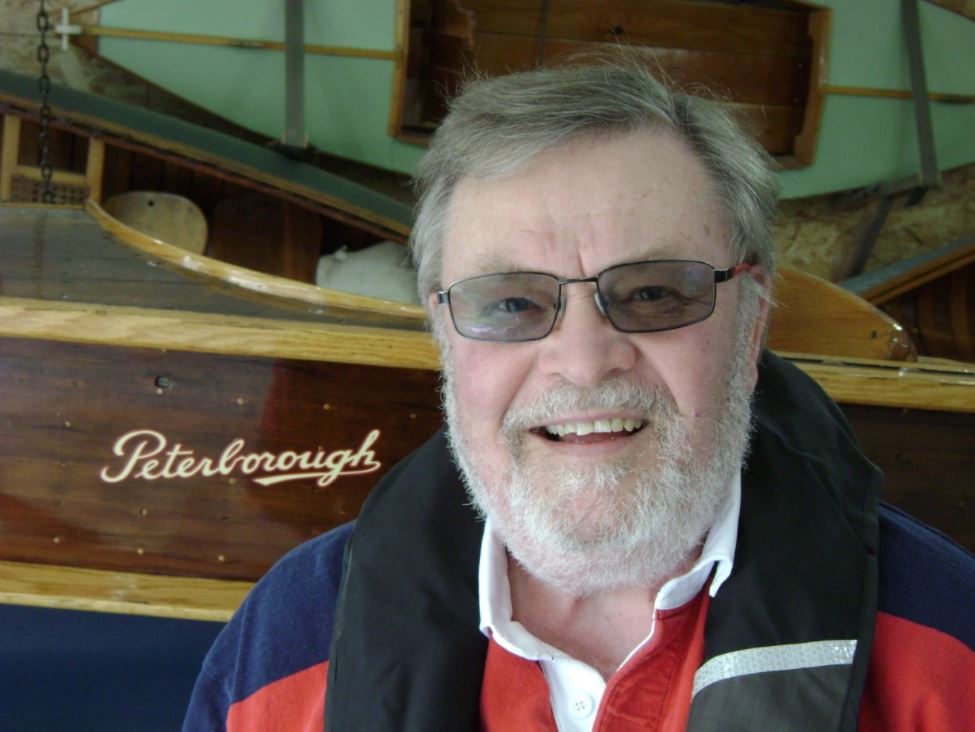

With over 50 years of experience as a marine specialist in the not-for-profit field, John has an unrivaled commitment to the community combined with a supportive management presence. He has served on over 45 volunteer Boards as Chair and Executive member. His experience includes 3 terms as Chair on the Canadian Safe Boating Council, and Co Chair of the Recreational Boating Advisory Committee to the National Canadian Marine Advisory Council. He has run the Safety Educational and Flare Disposal program across the country since 2012. A freelance marine specialist writer and a Safe Boating Educator, John has been responsible for Government Relations and management of national programs mandated by Transport Canada, Office of Boating Safety, representing the Canadian Power & Sail Squadron/CanBoat since 1999.